After our two class sessions this week, I feel that my knowledge of exactly what this class is all about has become clearer. When I originally signed up for this course, after reading the terms “code-switching” and “translanguaging”, I was unsure if someone like me would be able to participate like others. I only speak English fluently (I hardly count my French abilities even though I’ve been taking it for over a year), and I am rarely in positions, or at least I thought I was rarely in positions where I would need to change my behavior and switch to something else.
Through this week’s discussions I was able to begin a working definition of what these terms mean in general, and what they mean to me. I realize now that I do in fact switch between multiple types of English every single day; the way I talk to my roommates is vastly different than how I talk to the students I tutor, or my boss, or my professors. Such switching has become natural for me, which is almost startling. I have been cursing for as long as I can remember, and it used to get me into trouble with the other kids. I had never been taught that it was wrong, but as I’ve grown up I’ve realized that it is (obviously) unprofessional, and I subconsciously switch between a casual, cursing English to one that is more formal based on who I’m talking to.
Whenever this happens, I am always surprised, because cursing is second nature to me; I use curse words in the standard manner, but also for emphasis and for humor. To recognize now that I switch my behavior without even realizing has allowed me to understand and engage in texts where code-switching is at the forefront of what the piece intends to achieve. And in this way, I am able to confront the ways in which I am obscure to myself as Glissant explains, and how sometimes this obscurity is necessary.
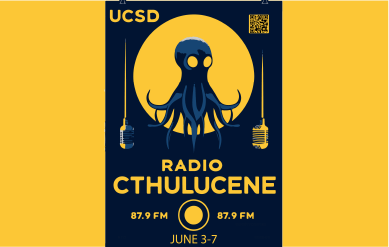
 Radio Chthulucene 87.9 FM
Leave a comment