Arnstein and Gómez-Peña’s “Son of Border Crisis” felt like the perfect encapsulation of Édouard Glissant’s philosophy from the excerpt of his work on opacity that we looked at earlier this week. While I could grasp themes of immigration and cultural crashes specific to the Chicanx experience, I had a hard time understanding some of the clips because they were in Spanish. However, the artists and writers do not owe me an explanation or a translation. I am likely not the target audience for this performance, and much like Glissant emphasizes, one has the right to capture “beings-as-Being” without explaining its existence to the reader. The piece would not have had such an effect if it was spoon-fed to its audience; I enjoyed and respected that I didn’t understand it in its entirety— which also becomes a more extensive reflection of my limited understanding of the speaker’s Mexican-American experience because I’m not from that community.
The concept of opacity is one I struggle with and question a lot in my own creative writing. How much of my work am I supposed to translate when writing in a language other than English? How much of each experience am I supposed to dissect for the reader to understand? Do I want the reader to research or know that Azerbaijani uses the Latin alphabet because Russia and Ataturk forcibly removed the previous Arabic one, or should I tell them directly? Who am I even writing for?
I felt a bit envious of ASCO’s work when reading about it in Urban Exile and their interviews in Frieze. They were able to explain their work and its influences, draw connections, and even have their work clarified by others. Once, I wrote a creative writing nonfiction piece with footnotes to explain terms, my choices, and even provide tangents that I found myself thinking about during the main text’s writing process. Although I had the space to explain in the footnotes, I wish I could have added footnotes to the footnotes to dissect my words and explanations further.
Does (over)explaining in writing ruin its effect, much like explaining a joke would? Am I a bad writer for writing about things that are unrelatable to a mass audience? How do I make myself and my experiences into a digestible experience for my reader? Can I be forgiven for this betrayal and treachery if it means trying to write for an audience outside my own cultural experiences?
I don’t have an answer to most of these questions, and I’m unsure where to start. For my radio project, I plan on writing about the modern-day segregated school systems in the Netherlands. This is conflicting because there is so much I have to explain to a reader about its structures, as this is not a well-known subject. How much can I leave out of the informational aspects to make room for more eccentric-based writing? Am I giving up an integral part of my writing to inform the reader?
To more unsolvable questions,
xx Deniz
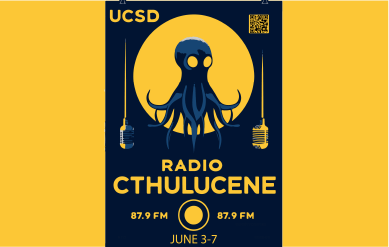
 Radio Chthulucene 87.9 FM
Leave a comment