1. K(eep) I(t) S(uper) S(imple)
2. Should be like talking to a friend, one person (in()tim(e)()ate)
3. Connecting local → national → global (his preference)
4. Radio does not impose a scene like TV, only a suggestion
5. Theater of the mind, what is writing/reading? Refraction of the mind into alternate experience?
6. DAILY DEADLINE (protestant work ethic of America)? Why daily? Does the time limit (pressure) hinder the art?
7. Video, audio, and writing journalism are all subjective? Changing?
8. New app for editing and producing radio, but does working on a phone take away from the creative process?
9. Babbling brook of bullshit (Larry David quote)
10. Inverted pyramid, eaten from the bottom up
11. Pause means something, the profundity of silence
12. Writes as if no one is going to hear it again
13. Likens himself to a DJ, specifically in choosing people’s voices and sound
During his presentation, Marco Wermen seemed to be especially interested in how we reacted to his transitions and the ways in which he choose to translate the interviewees into English. His lecture made me think about the ways in which translanguaging and opacity are forced to function differently depending on the medium and intention of the writing/art. Specifically, when translating someone else’s story for the purposes of journalism into a form like radio, a different language needs to be translated to the dominant language of where it is going to be aired, more likely than when something is written. For example, in his reporting, Wermen needed to translate the people he was interviewing so the story could be received. This is different from refraining from translating something in writing because the audience is less likely to be able to go back to translate. This is not to promote always translating for auditory projects but rather to contemplate how practicing opacity in this way for auditive works needs to possibly be more intentional. I also thought his distaste for translation, despite relying on it for his work, was interesting. He explained how he feels like he is imposing himself over the storyteller when translating, however his work requires this for the story to be told.
Listening to Wermen forced me to seriously consider the differences between writing and radio, in a way I had not before, and would not if we were not doing this project. Werman compared radio to TV or film of the mind because it does not impose an image. I found myself returning to this postulation because I had always considered writing to assume this definition. I suppose they both could. However, there is a permanence of writing, that does not exist with radio (although the stakes of this have changed since most things are now recorded). In creating my project, specifically converting the written form into auditory, I want to play with this idea and heighten the impermanence and “theater of the mind” elements.
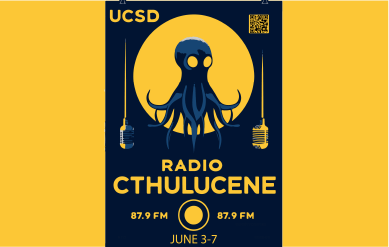
 Radio Chthulucene 87.9 FM
Leave a comment