on translanguaging and podcast culture
For some reason, I never even considered the idea of this final project taking the form of a podcast. Perhaps because the work we’ve discussed in class so far has been fairly experimental and textually-based, my brainstorming didn’t include any concepts as straightforward as just…talking into a microphone. Especially after today’s lecture with Marco Werman, I felt a lot more energized about drafting my project. I’m personally a big fan of podcasts, but I feel like the market is really oversaturated with influencers who see it as a lucrative market rather than a place to disseminate provocative and important stories. Not that I have superiority complex about my taste in media–I enjoy a comedy podcast or a silly Youtube video as much as the next person. Today’s discussion, however, really opened my eyes to the power of the podcast format and the elements that go into constructing an effective and seamless recording. Most of the things I listen to are stream-of-consciousness, talk-show types, and not so formally structured.
What stuck with me the most was Marco’s suggestion to ask yourself, “Is my writing talking to a friend?” Because the format of this project is already pretty out of my comfort zone, I’d already told myself that whatever I came up with had to be artistically challenging, high-brow, “worthy of being an installation.” Listening to the clips of The World about Ali Farka Toure and Marco’s reporting in Kiryat Shmona, what struck me the most was how human these stories were. There were no fanciful flourishes or strategically-chosen pieces of transitional music; all of the sonic elements were chosen with the exact intention of keeping the story as true to the subject’s lived experiences as possible. Details as simple as the recording of rushing water, or kids playing soccer in the background are definitely touches that I want to include in my project.
-sydney
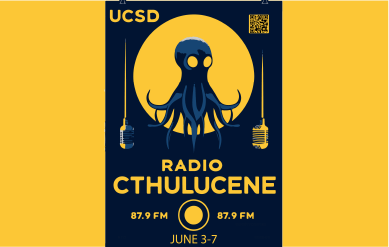
 Radio Chthulucene 87.9 FM
Leave a comment