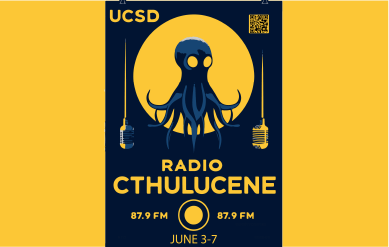
I realized extremely late that I didn’t upload my journals here after I wrote them out separately… but it’s better late than never:
Journal 4:
Not being able to go to class when Marco Werman was visiting was such a disappointment for myself. I thought listening to his works was very interesting and gave me a different experience in which to think about how my final project will turn out. I would’ve really liked to hear what he had to say about the piece on Kiryat Shmona and how workers feel no kinship with other displaced people, despite being displaced themselves. It shocked me to think that the people interviewed were upset to be put in a hotel, a place where they are more or less safe- and can’t put themselves in a place to feel anything for people who are sleeping in dirt because there are no homes- let alone hotels- for them to stay. I read a lot about culture in my classes on politics and this way of thinking is really relevant to what Jeremy Waldron says about identity- that when people think they hold one “pure” culture, if that culture is attacked then THEY are being attacked. This is absolutely not an excuse for any people to lack empathy for others, and was used in a context that explained why we have anti-immigrant sentiment. Social identity theory ties into this as well, and says people maintain self-esteem when we perceive our culture is better than others which was evidenced by studies done in France and the Netherlands. You see this cultural threat logic everywhere, and I wish I could’ve been able to use my knowledge to contribute to this class discussion.
At the core of my tangent, being able to tie in the literature I get from other classes into this one is really important to me, because it feels so relevant to my own identity that creative literature and political thought are handling the same topics (though in different ways). When I think about my own project, I want to talk about this intersection a lot more even though I’m not necessarily sure what I want to do with it. It’s difficult to think of a work in any form about my identity because it’s not a concrete place in my mind. I perceive others to draw their identity from a handful of places- and I’m not sure I see my own identity in the same way.
Journal 5:
I finally sat down and wrote my piece- which ended up being poetry. Shocker. For everything I said about wanting to experiment with form and being inspired by DICTEE I think it’s harder when knowing the end result can’t have anything visual. Playing with visuals is the biggest way I feel that I could make my piece more dynamic, especially since I’ve never even thought about audio being an avenue for me to go down.
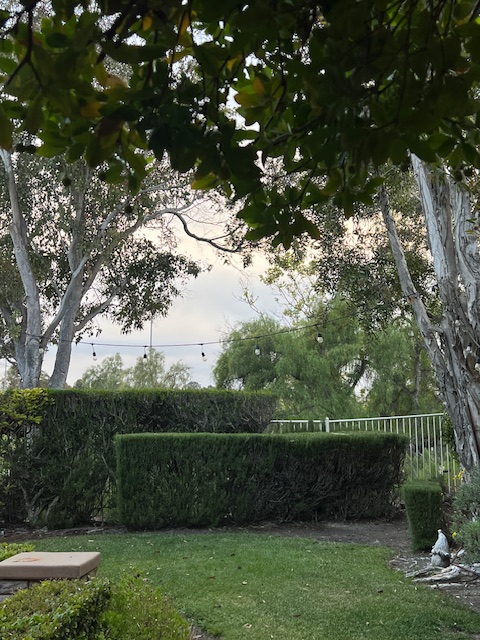
I had a lot of i d e a s about what I wanted to communicate in my work about myself, and I originally thought I was going to incorporate music instead of words in places- but I didn’t think I was able to do that in this draft yet. I want to go back and see where I might be able to bring that in, but I’m afraid that it’ll fall flat in reality compared to how I see it playing out in my head. I agonized for a while about how I was going to write my work, and until this week I genuinely hadn’t written one line. But I had a day alone at my dad’s house -the house I grew up in- and sitting in my childhood backyard, I wrote it all out in about an hour. That backyard is the most peaceful and beautiful piece of earth that’s all my own and I knew its parts were fundamental to incorporate into my final piece. Like I said in my other journals, I don’t feel that I have a cultural identity because I don’t know any of my languages. It feels silly to boil culture down to just language even though it’s an incorporation of many parts, but to me I felt locked out of those parts because the key (to me) is language. I thought a lot about why I never learned Spanish or Farsi, and that’s the feeding point of this poem. It paints my dad in a bad light, but he’s grown a lot from the viewpoint I give in my work. I feel the need to clarify that point because I love my dad! Anyway, I also went into exploring how my mom and I used dance to bring ourselves closer to our Mexican roots, and what started out as something silly for us both became a really pivotal cultural experience for both of us, and it’s changed my view of how I fit into being a Mexican person.
Here’s some pictures of my backyard to ground the work and a draft of my poem!

Journal 6:
For how challenging TwERK was said to be, I found it to be a very interesting and engaging read. At no point did I feel overwhelmed by my not understanding (like with DICTEE) and found myself wanting more. Maybe I resonated more with this style of translanguaging, maybe it’s just personal preference. Either way, I found the wildly different parts appealing- each work felt like its own separate entity while still making sense in the whole. When taking my notes, I felt the most drawn to pistology. The style and formatting is similar to what I use in my own work, and I like it because it fits in my brain. When I read and write I find the structure of normal sentences to be restricting. Reading anything in one burst of text with no breaks makes it difficult for me to portray my own emotions, and I find it even harder to gather the real emotion from the block of text I’m writing right now. Anyway, I truly loved the mix of spanish, japanese, and english with no distinct signal that there is a switch in the language. If I knew more than one language this is definitely a style that I would’ve taken into my own final project. I appreciated that I had to read the work so many times, first to pick apart what languages I’m seeing, then to read it fully in English, then again so I could even understand what the words were telling me. The topic itself also stood out to me more than any other piece in TwERK, with most of the pieces connecting to womanhood, sexuality, etc. this love/hate relationship with media resonated exactly with how I feel about technology being beautiful in the worst sort of way. In my mind, media and consuming it has created a different kind of code-switching. Who you are, how you speak, and how you behave changes infinitely when you pick up the phone or when you use social media in general compared to how people generally react in in-person communication. Or maybe I’m completely wrong about this piece but the line “by broadcast, you are my sagrada communion, you are my Antichrist” was the main area where my own interpretation started making sense.
A wish I have for my final project, and just as a writer in general is to be able to write things that don’t make sense for others. My writing is very focused on who will read it, and after my workshop and receiving some feedback I felt even more of that pressure to make my piece digestible for others. But when I read works like TwERK it brings me back to how experimental writing is, and people will make sense of my writing in any way they can even if it’s different from how I envisioned it myself.
Journal 7:
The visit from Cognate Collective was inspiring. I have no better words to describe it, and no fancier phrase to put my thoughts into. The time they spent in class talking about their work reminded me that people do experimental work outside of the classroom, without a grade or recognition being the main goal. That I could be experimental outside of the classroom if I wished to. I tried to take notes during the workshop, however, I found myself focusing on the class instead so bear with me as a lot of what I’m talking about is going to be from memory. The most interesting point they brought to the class (in my eyes)was their discussion of border blasters and the idea that how far border blasters go on maps redraws what we view as the border, and we draw different soundscapes that create communities across national lines. It takes no effort as someone from a political science perspective to think of nations literally, but I really loved how this view of radio waves completely goes against where a nation can ebb and flow. Reminders like these are exactly why I love literature and political science together, they challenge each other so well that it’s almost alarming.
I also found their work at the border to be extremely interesting. Though I found it a bit difficult to speak up in class, I have experienced many times being told not to interact or make eye contact with vendors when crossing the border. My favorite part of humanity is connection and recognition, so their project at the border taking the voices of people at the border- crossers and vendors alike- was beautiful to hear about and listen to. Thinking about the border from San Diego to Mexico had me thinking a lot about my own work, and how badly I wish to cross the border into feeling connected with my culture. There is a physical border I can cross, but the mental border is much more difficult- language being the meanest patrol officer you could encounter. The metaphor in my work is much less severe, and I created a gate instead of a border, with plants, wind, and ground symbolizing different aspects of culture. However, if I ever wanted to change the tone of this work I think I’d be inspired to use the same metaphor with a mental border instead. But, I do love the softness of my work as it is because it resonates with me more as a person and I don’t necessarily ALWAYS view culture as something scary- which is generally what a border might imply.
Journal 8:
Understanding Broccoli was pretty difficult for me to understand- but hearing her talk about the painstaking process of translating the piece gave me such a deep appreciation for the efforts people go through to honor the languages in which they speak and write. If this was my book, I feel as though the hours of going back and forth through Chat GPT, my own translations, and outside translations would’ve drained me to the point of giving up. It made me think that perhaps I wasn’t going through enough trouble to make my own work as accurate as possible (Google Translate was my best friend… and then she talked about how horrible it was which made me need to rethink even my smallest translations).
This week also made me realize that I should never consider being any type of audio engineer. I’d been working slowly on formulating my idea for how I wanted my piece to sound, and that process didn’t give me enough time to actually finish the audio work on time. Generally, I could not decide how I wanted to speak the piece. When I was a kid, I did acting and so I thought it would be easy to choose a sort of character and record the whole thing easily. Yet, it was more difficult to be myself than to be someone else, and when I was trying to record myself I found I was getting shy and nitpicking every word. It was much more difficult than I imagined to speak my piece out loud- I’m used to speaking it with confidence in my head. All of that confidence disappeared when I spoke.
I eventually settled on a softer theme for the poem, and I wanted to recreate the environment I was in when I wrote it to begin with. It was dusk, right after the sun had set but there was still some noise from animals and insects- and it was easy to find a soft audio that fit that aesthetic! Which was about the only easy thing about the whole radio part of the project. Another considerable challenge was creating the voices of other people. I use a lot of voices besides my own and I wanted to get other people to speak the lines from my father, the women in the elevator, and my mother. But it all felt too personal, and I didn’t want to ask anyone in my family to do it- let alone a stranger. I know my work paints my dad in a bad light and I just didn’t want to involve others or it eventually getting back to my dad by using family. Because of that, a majority of the contrasts I imagined in the audio file when I first wrote it disappeared. I tried to resolve this by using AI voices, but compared to the inflections in my own voice it sounded ingenuine and really brought me out of the listening experience because all I could think about was how oddly the voices stuck out. I still used them in some places, but I’m not sure it sounds that good in terms of the audio as a whole.
A big struggle was the parts where I actually spoke Spanish. It’s a bit depressing that in a piece about speaking Spanish and becoming more comfortable with my own culture, that I actually cut out lines where I was actually speaking the language. Actually, the more I think about it the more I realize it’s fitting to the piece as a whole that I didn’t feel comfortable speaking. As the whole main idea of my poem suggests, I feel a lot of shame in connection to speaking Spanish. So, when I was recording the audio for the Spanish portions over and over again, I felt that I could never get it right. The language doesn’t sit right in my mouth and so I cut it. Maybe that sounds like giving up, and I can agree with that. But, I would like to think I know my limits and I wouldn’t have been happy with how the lines I cut sounded. Overall, though, I am happy with how it turned out in the end! I tried very hard.
Journal 9:
Despite how difficult it was to create the audio file and make it as close to how I imagined it in my head, it was definitely the most fun project I’ve ever done at UCSD. I loved being my own story, creating the audio, working with my partner, and getting to see the radio up and running. I didn’t talk about my partner in my other journals but Julia was genuinely amazing and so much fun to work with; she even took me to the EnVision lab which was so cool to experience. She was really helpful in explaining the actual radio components so I got to understand how it was all working out. Collaborating and putting the radio up together was really fulfilling, and I appreciate a lot that this was not a solitary project like everything else I’ve done at UCSD has been. Getting permission from the music building was a bit of a long process, but nothing too intense. I can understand that the radio with its open wires can look slightly suspicious, but it all worked out.
I love the final version of my project, and I think the main strength is the emotion I was able to carry through to the audio version. I had one of my really close friends listen to it and he almost cried (in a good way), so I’m glad I was able to bring some of my heart out for people to listen to and understand me more deeply. I’m also proud of the metaphor with the girl and gate, and that I was able to carry it throughout without losing it along the way. I didn’t overly edit my piece, only adding some things here and there for my own clarity- but there was a reason for that! I started reading The Way of the Fearless Writer by Beth Kempton that talked about how sometimes we don’t let our writing be. We edit, and over edit, and re-edit because we want the work to serve some purpose for us outside of the writing itself. Reading that made me rethink about why I edit my work, and if I wasn’t so scared about what other people thought, would I meticulously rewrite and edit my works like I do? Nope. So I decided that despite some feedback of parts not making sense, that I wasn’t going to do anything about that. I understand it, and I think anyone that reads it can get what they want from it! I love how this class encourages that sort of thinking, and I’m proud of myself for letting my work be itself.
Some weaknesses I see mainly come from the audio. I use a lot of references in my work to music styles (cumbia and salsa) but I didn’t incorporate any of those audios into the final piece. This was intentional, I felt that the beats of cumbia and salsa didn’t match the softness I was conveying throughout the work. I did use a rumba instead during the part where I’m talking with my mother about learning to dance, but not using the music/ changing the style of music makes my audio slightly inaccurate. Maybe a little more than slightly because I directly reference the steps and beat you use in salsa, while explicitly stating both types of music that you never actually hear. If I were to go back, I would do away with wanting the audio to have one cohesive feeling and let the different types of music come through. I would also include the line of Spanish I took out, I’d want to suck it up and just say it even if I think it sounds wrong. I want to publish this piece somewhere because I’m very proud of it, but I need to do some research on where. Overall, I loved this class and I hope you continue it in other years.
 Radio Chthulucene 87.9 FM
Leave a comment